Showing posts with label Enclosure Construction. Show all posts

Tuesday, November 8, 2011

Pet Fox Enclosures: Fencing

As a small forward, sorry for this post being so late. We're in the middle of a major move, and I haven't had time to update.

After you have the location and flooring decided, the next major component of a fox enclosure are the walls. Any material that is safe and strong enough to keep the fox in (and curious or malicious strangers out) will do, though some work better than others. The enclosure should also be tall enough for you to enter and exit easily.

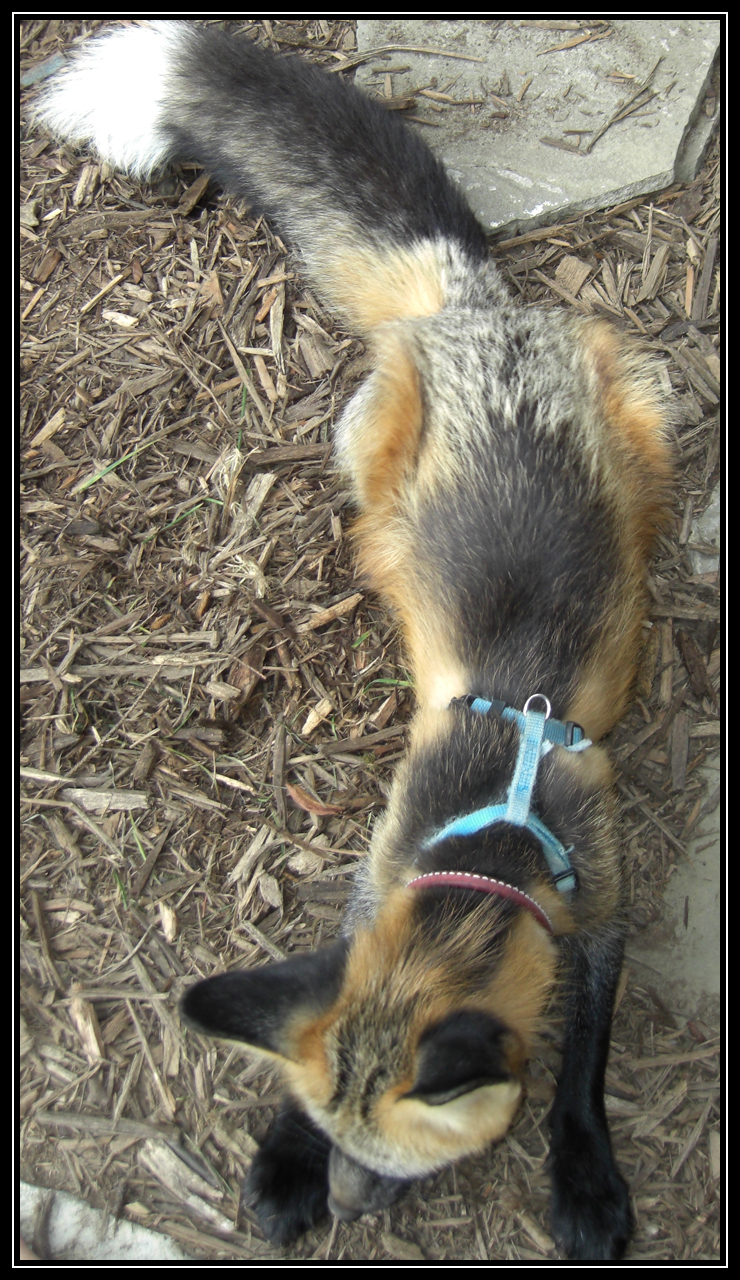
One of the best enclosure wall designs are large, bolted-together panels. They're strong, made of fox-safe material, weather-resistant, and very easy for one person to take apart and re-assemble. Due to their modular design, it's very easy to move or alter your enclosure if you need to. The same panels can be used for flooring under a layer of mulch, and for an escape-proof roof. This is what I made both Gizmo's indoor play-pen and outdoor play-yard out of, and I have never had an escape or injury.

One such kennel set can be purchased here. Please note that if you do go this route, you will need to buy several of the sets to make an enclosure big enough. Also keep in mind that the roof that comes with the kennel set is not sufficient to keep a fox enclosed. To create a minimum 10' by 10' enclosure for one fox, using panels for both flooring and roofing, you will need to purchase 3 sets.

Another alternative is to use chain link fencing for an enclosure perimeter. This is a cheaper option, though they are generally less portable and more difficult to construct, so keep that in mind. They do manufacture chain link 'dog kennel' sets similar to the metal panels I described above, but buyer beware. Some sets come with rounded doors on them as opposed to squared-off ones. Your fox may try to escape through this "corner" and get caught--I know of at least one dog who suffocated this way. If you do go with chain link, find a set with a door that closes flush with it's frame.

I would advise against using wood to build fox enclosure walls. To be safe for the fox (they chew everything), the wood would have to be untreated, and untreated wood for an outdoor enclosure would have a relatively short lifespan. Once it starts to weaken and rot, it becomes both and escape and a splinter hazard.

Tuesday, October 4, 2011

Pet Fox Enclosures: Flooring

Special care must be taken when deciding what sort of flooring to use in your fox's outdoor enclosure. They are natural diggers, so it is up to you to make sure that they do not dig out. Don't assume you'll be able to catch them at it or spot any holes before they get big enough to escape through.

For a non-portable, permanent enclosure, I have heard of some people using a poured concrete floor. If you do choose to go this route, be sure to account for drainage or your enclosure will quickly become a swamp. Concrete can be very rough on a pet fox's paw pads, so plan to cover it in either dirt, mulch, or some other soft "diggable" substrate.

Another common and highly effective floor strategy is to bury chainlink or similar fencing under a thick layer of mulch. This allows for great drainage, but also prevents dig-outs and escapes. There are many variations on this theme that can be explored--for Gizmo's outdoor enclosure, we have buried heavy paving stones under a thick layer of dirt and mulch to prevent dig-outs. This leads to a more natural look when he does happen to dig deep enough to uncover one. If stones are used, they need to be spaced very closely together to prevent the fox from digging between them.

For the mulch covering, it's best to use natural, untreated mulch spread in a very thick layer over the entire area. Treated mulch can have questionable dyes or pesticides meant to discourage termites in them--not something you want to expose your pet fox to. I also strongly advise against using any of the new "rubber mulches" that have come out. Yes, they're long lasting. Yes, they look great. But they're also made out of the same material as most dog toys. By now, your fox has likely come to view rubber as something to put in his mouth and play with, and a swallowed rubber mulch chip can lead to blockages or worse.

Be sure to come back next week for more information on designing the ideal enclosure for your pet fox!

Tuesday, September 27, 2011

Pet Fox Enclosures: Choosing The Location

The first two things to consider when building a fox enclosure are size and location. For a red fox, an absolute minimum of 100 square feet is needed. If multiple foxes are to be kept in the same enclosure, start with a base of 100 square feet, and then add an additional 50 square feet for each fox in the enclosure (so an enclosure to keep 3 foxes should be a minimum of 250 square feet.) Keep in mind that these are the absolute minimums. If at all possible, your fox’s outdoor enclosure should be much bigger. The more room you can give them while keeping them safe and secure, the happier they will be.

The enclosure should be in a safe location. Ideally, it should be protected by a privacy fence, and invisible from the road, to discourage curious passerby or those with bad intentions. Inspect the area you’re considering turning into a pen. Avoid marshy ground or standing pools of water, as these indicate drainage issues that will not be easy to fix. If you build the enclosure on a slope, keep in mind that foxes love to dig in well-drained, sloped soil, so you will need to take even more precautions against dig outs.

The last thing you need to consider about location is exposure. Your pet will need to be sheltered from the elements. Consider if your chosen location has a windbreak and a source of shade; if either of these things is lacking, you will need to come up with a means of providing them.

Now that you’ve got your location picked out, it’s time to build! Be sure to come back next week when I start to discuss the actual construction of the enclosure.

Tuesday, September 20, 2011

Pet Fox Enclosures: Why You Need An Outdoor Enclosure

“Do I really need an outdoor enclosure for a pet fox?” I get this question quite a bit from potential fox owners, and the answer is always the same. Yes, yes you definitely do. Having an outside area for your fox to safely play is as important as feeding them.

Foxes are extremely high-energy, intelligent animals, so they need a lot of physical exercise and mental stimulation. Having an outdoor enclosure helps to work their muscles as they climb and explore, gives them a wide variety of mental stimulation, and perhaps most importantly, gives them exposure to sunshine and outdoor air.


Furthermore, you cannot leave a pet fox unattended in your house. If they are not contained, they need constant supervision. Obviously, you cannot watch your pet 24/7, so you need to have a place you can contain them when you can’t keep an eye on them. A well-built enclosure gives your pet an exciting, engaging place to play and relax when you can’t be there to keep an eye on them. Otherwise, you need to lock them up in a dog crate, or allow them to destroy your house. In that case, neither you nor the fox wins.


Fortunately, a good enclosure isn’t difficult to design or construct. Over the next few weeks, I will be publishing a series of articles on the construction of high-quality enclosures to keep both you and your fox happy.